Louisville Field Hockey Celebrates 50 Years and More
July 08, 2026 | Field Hockey
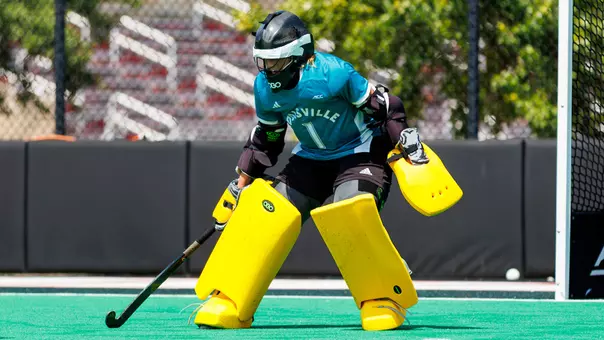
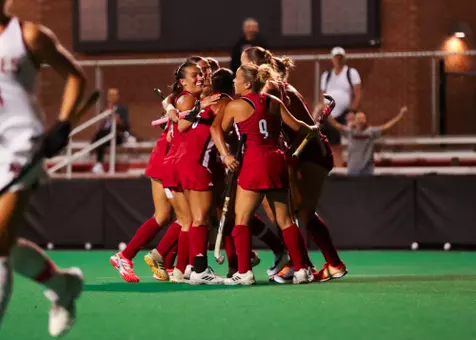
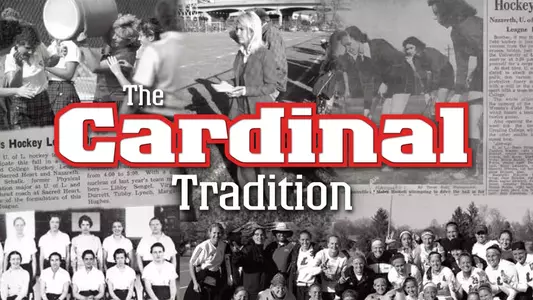
The 2026 University of Louisville field hockey season will mark a time of celebration and appreciation as the program marks its 50th season as an NCAA Division I sanctioned sport.
The 50th season is impressive enough for a sport which only currently fields 83 teams on the Division I level, field hockey is actually one of the oldest women’s sports at the University of Louisville.
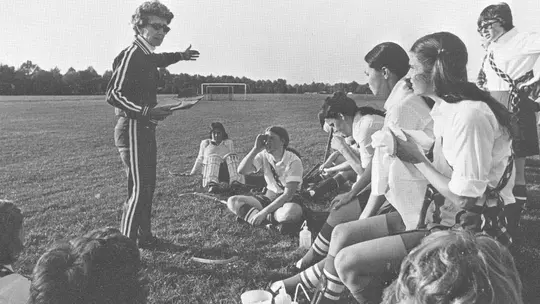
The Fall Term of 1927 was the first year that field hockey was played at the University of Louisville. That year U of L watched as a young team that played with tremendous enthusiasm, albeit without a coach until 1928 when Miss Lillian (Tucky) Sanders took over.
In 1928 after winning their first two local games, the team embarked on what was then considered a milestone when the team traveled to Nashville to play Peabody College. This trip to Nashville was the first ever taken by a Southern girls’ hockey team. Games were almost exclusively played with local teams. In this respect U of L had taken a jump on the other Southern schools. Eventually, women’s field hockey became a varsity sport along with women’s basketball, tennis, volleyball, and gymnastics.
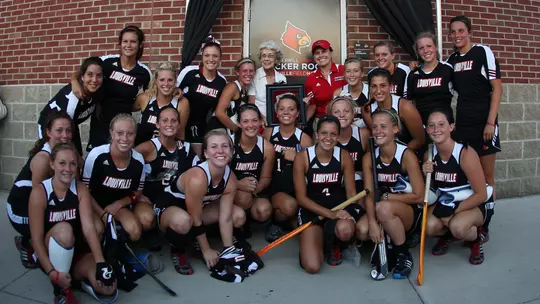
In the early days, the program looked to its matriarch, Mrs. Sherrill Brakmeier. Affectionately known as ‘Mrs. B,’ she served as head coach of the Field Hockey team for more than 25 years and was a pioneer in women’s athletics, paving the way for many who followed.In 1983, she became the first woman to be inducted into the University of Louisville Athletic Hall of Fame.
In 2012, the UofL field hockey program dedicated its locker room to her in conjunction with her 90th birthday (August 25). She made a point of attending at least one field hockey game every year and always met with the team after cheering them on.
After making the move from a club sport to a varsity sport in 1972, UofL’s field hockey success rose in 1976 under the direction of coach Sandy McLaughlin Tabler.
Described by her players as someone who was an amazing motivator and made you want to be a better person, McLaughlin Tabler recalls those days of growing the program as a labor of love. She searched for anyone with experience and invited them to bring a friend or two. It was also a tall task to get the grass cut to an appropriate length. The team spent the first 10 minutes of each practice making sure the field was playable which typically meant clearing rocks off.
Under McLaughlin Tabler’s tutelage, the Cardinals had an impressive run with three Kentucky Women’s Intercollegiate Conference (KWIC) championships, a runner-up finish and represented the KWIC at the Southern Region II Association for Intercollegiate Athletics for Women (AIAW) tournament twice.
The addition of then-assistant coach Debbie Condreva helped propel the Cardinals' early success.
According to McLaughlin Tabler, “Since I didn’t play field hockey in college, I was always cognizant of how much I didn’t know; so I always wanted to learn more in order to teach my players, and I wanted to bring in people that could teach them more. Debbie was the best player in the State at that time, and I wanted my players to learn from the best! So I did everything I could to get her here at Louisville, and it turned out to be one of my best decisions ever! Besides her knowledge of the game and her high level of skills… she brought laughter and fun! Debbie was always laughing and joking around, getting the players to laugh; which balanced out my high level of seriousness. Our team had a lot more fun and was more successful after Coach Condreva came aboard!”
Sherry Effinger Brown and Terry Vogt also brought additional spark to the team, adding offensive firepower with Effinger Brown still listed among the top scorers in program history and was inducted into UofL Athletics Hall of Fame in 1992.
[In the early years] our players didn’t get any scholarships. Most of the team had jobs on weekends when we weren’t playing. They didn’t get any fancy uniforms, cleats or sticks. Everyone was out there because they LOVED Field Hockey; they LOVED to compete; and they LOVED each other! We had no pressure except for the pressure we put on ourselves; and we had so, so much FUN!Coach Sandy McLaughlin Tabler
School records indicate that the Cards competed in the KWIC from 1976-82. Louisville played as a Midwest Independent team from 1984-93 and joined the Mid-American Conference in 1994.
Condreva, who had served as an assistant under McLaughlin, took over the reins as the Cardinals’ head coach from 1981-84 and Cheri Hauber guided the team in 1985 and 1986.
Theresa Wessel Young, who played for the Cardinals from 1982-86 reminisces about her years on the team.
“When I was a player, our games and practices were held at the old Parkway Field. Between the passing trains, the smell from the Purina plant and its towering silos, the tall grass, and limited funding, it wasn't exactly a state-of-the-art facility. Yet somehow, we remained competitive. Some of my favorite memories are from our trips to St. Louis, where we had the opportunity to play on artificial turf at the Anheuser-Busch fields. Our coach, Debbie Condreva, always made sure the team enjoyed at least one dinner each season at Stan Musial's Restaurant, a tradition we all looked forward to. Team travel was very different then. We piled into two 15-passenger vans packed with goalie equipment, sticks, balls, and each player's gear. It was crowded, but those trips helped build the camaraderie that made our teams special.”
The arrival of Louisville football coach Howard Schnellenberger in 1985 brought additional opportunities with access to the weight room and training facilities. Young recalls it as turning point during her time as a student-athlete and impactful for the program during her coaching career which spanned from 1987 through 1991.
As an assistant coach and later as head coach, I watched our athletes become stronger, faster, and more committed to field hockey as a year-round sport.Theresa Wessel Young (Head Coach, 1987-91)
During Young’s time as a head coach, UofL was still competing as a Midwest Independent school and Young was working diligently with then-Athletic Director Bill Olsen to prepare the program to join a field hockey conference, a goal that was not realized until the 1994 season when Louisville became an affiliate member of the Mid-American Conference.

The MAC ERA
Louisville field hockey moved from an independent school without a conference to the Mid-American Conference starting in the 1994 season. In a competitive league that featured NCAA tournament caliber teams such as Ball State and Kent State, the Cards struggled early to find a foothold, winning one conference game in their first three seasons.
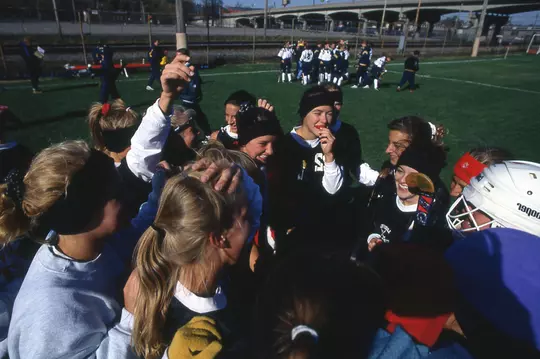
UofL’s newly-hired Athletic Director, Tom Jurich, brought in the program’s first full-time coach. Former Olympian Pam Bustin, who had played with Team USA in the 1996 Atlanta Olympics, took over the helm prior to the 1998 season. By this time, the Cardinals had also moved their home field from Parkway Field to the turf of Cardinal Stadium, located at the Kentucky Fair and Exposition Center (KFEC).
Bustin went on to orchestrate one of the more remarkable turnarounds in Division I field hockey.
In her first season, the Cardinals posted one win, snapping a 34-game losing streak that started in the 1996 campaign. In 1999, Louisville registered five wins including one against a league opponent.
The KFEC and Cardinal Stadium served the program well while a brand new state-of-the-art facility – one of the few dedicated solely to field hockey at the time - was being built on campus. On Sept. 22, 2000, UofL christened Trager Stadium with a 3-2 win over Ohio University.
While the Cards played their home games at Trager Stadium, their locker rooms were still under construction at the time, so they would make the short trip from the KFEC to Trager Stadium for practice and games.
Louisville field hockey and my four years at UofL gave me more memories and smiles than I could possibly count. I was part of the MAC era, when the KFEC (Kentucky Fair and Exposition Center) was home and we rode vans over to the field. I was there for our first bid to the NCAA tournament, and when our jerseys still had collars. I can't say there's one singular moment or memory from UofL that shines the brightest. What I can say is, Louisville field hockey connected me to so many incredible people, including many friends who have become my chosen family. A piece of my heart will always be in Louisville. Forever grateful for the opportunity to be a part of something so special.”Casey Lehman Farley (2000-2003)
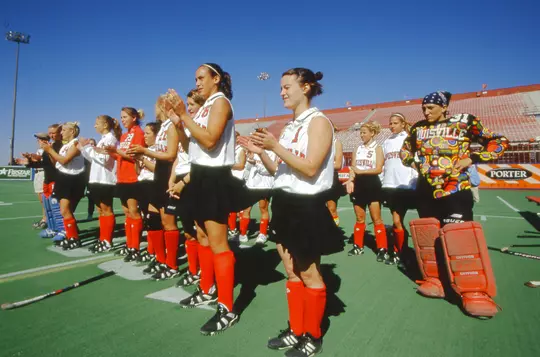
Coming to Louisville was truly the best decision I ever made. The memories I made here are among the most meaningful and unforgettable of my life, and I will carry them with me forever. Being part of Team Cardinal gave me so much more than the opportunity to play hockey—it gave me lifelong friendships, unforgettable moments, and a family I will always cherish.Danielle Barr - 1999-2002, two-time All-MAC selection
“I am incredibly thankful for the laughter, the fun, the games, and even the occasional bad decisions that made this experience so special. Louisville will always hold a special place in my heart, and I am deeply grateful to Pam [Bustin], [Christy] Utter, Juz, [Justine Sowry} and the incredible support staff who helped make every moment possible. I truly am—and always will be—so proud to have been a part of Team Cardinal!”"
By the end of the 2000 season, momentum took hold and the Cards were rolling full steam ahead with 14 wins and a 5-5 mark in conference play and a second-round appearance in the MAC tournament. The 2001 season saw the Cardinals set a program record with 16 wins and a 7-3 mark in the league. In 2002, Louisville earned a share of the regular season title.
The program was continuing to grow, earning more success on the field and building on its foundation in the locker room and beyond.
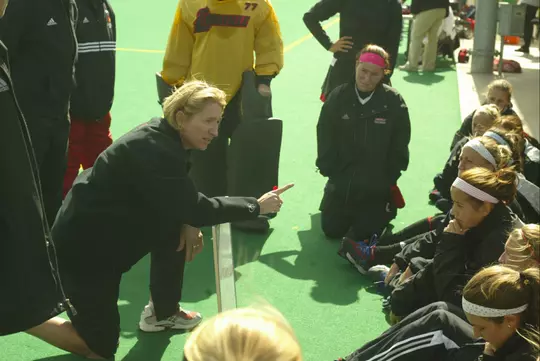
With the bar set higher, the 2003 Cardinals won the MAC tournament and earned the program’s first NCAA tournament berth, ultimately falling 2-0 to Michigan State in the first round. In their final season in the MAC, Louisville earned the regular season and tournament titles, completing their 10-year run in the conference starting at the bottom of the standings and finishing on top.

In addition to several team milestones, the Cardinals also achieved several individual accomplishments including their first National Field Hockey Coaches Association All-America honoree in goalkeeper Christy Hershey Allman who was named to the third team in 2001. She topped that by earning the honor again, this time with a second team nod in 2003 after being recognized as the MAC Player of the Year.

Allman, who was inducted into the UofL Athletics Hall of Fame in 2015 looks back on her time at Louisville with fondness:
“When I really think about those years, I realize just how different the program—and college athletics in general—was then compared to what it is today. Louisville wasn’t the program it is now. There was no social media documenting everything we did, no constant stream of photos and videos, and no expectation that every moment needed to be captured. But when I think about my time at Louisville, the games aren’t actually the first things that come to mind."
I remember the team. I remember the heart we had. I remember the early-morning practices, the exhaustion, the laughs, and all of the ridiculous little moments that made those years what they were. There was something really special about that era of Louisville field hockey. We didn’t have all of the things that exist in the program today, but we had each other... Louisville has grown so much since those days, and it’s incredible to see what the program has become. But I’m grateful that I got to experience and contribute to part of Louisville’s growth!”Christy Hershey Allman, 2000-03
The voices from the ‘MAC era’ are still being heard today, quietly echoed in the locker room and literally on television. Suzanne Irwin Bush, has seen the growth, not only as a player from 2001-04, but also as an ACC Network and ESPN analyst who has covered the game over the years from the regular season to the NCAA Championships and even the 2024 Olympics.
Wearing the L on my jersey was always about so much more than field hockey. Louisville challenged me, shaped me, and gave me a sense of pride and belonging that has never left. I came to Louisville to play a sport I loved, but I left with lifelong best friends - women who have been beside me through every season of life since."Suzanne Irwin Bush, 2001-04
Irwin Bush credits her time at Louisville as instrumental in her career path.
"Louisville also gave me my first opportunity behind a microphone and helped launch a broadcasting career I never could have imagined as a student-athlete. To now cover this sport on a national stage, while carrying a little piece of Louisville with me, is something I never take for granted.
And somehow, all these years later, I still get to be a small part of this team - my view just happens to be from the press box now instead of the field. It is never lost on me how special it is to stay connected to the program and the sport that molded so much of who I am.
Field hockey taught me that 10 seconds matter, (IYKYK) a few seconds can change a game, create a memory, or even alter the course of your life. Louisville gave me so many of those moments: lifelong friendships, a broadcasting career that still makes me pinch myself that I actually get to do this for a living, and a connection to this sport that continues today.
I will forever be grateful that I had the privilege of wearing the L across my chest - and that, in a different way, I still get to wear it today. Once a Cardinal, always a Cardinal.”

The next installment of UofL Field Hockey’s history celebration will be available here soon.